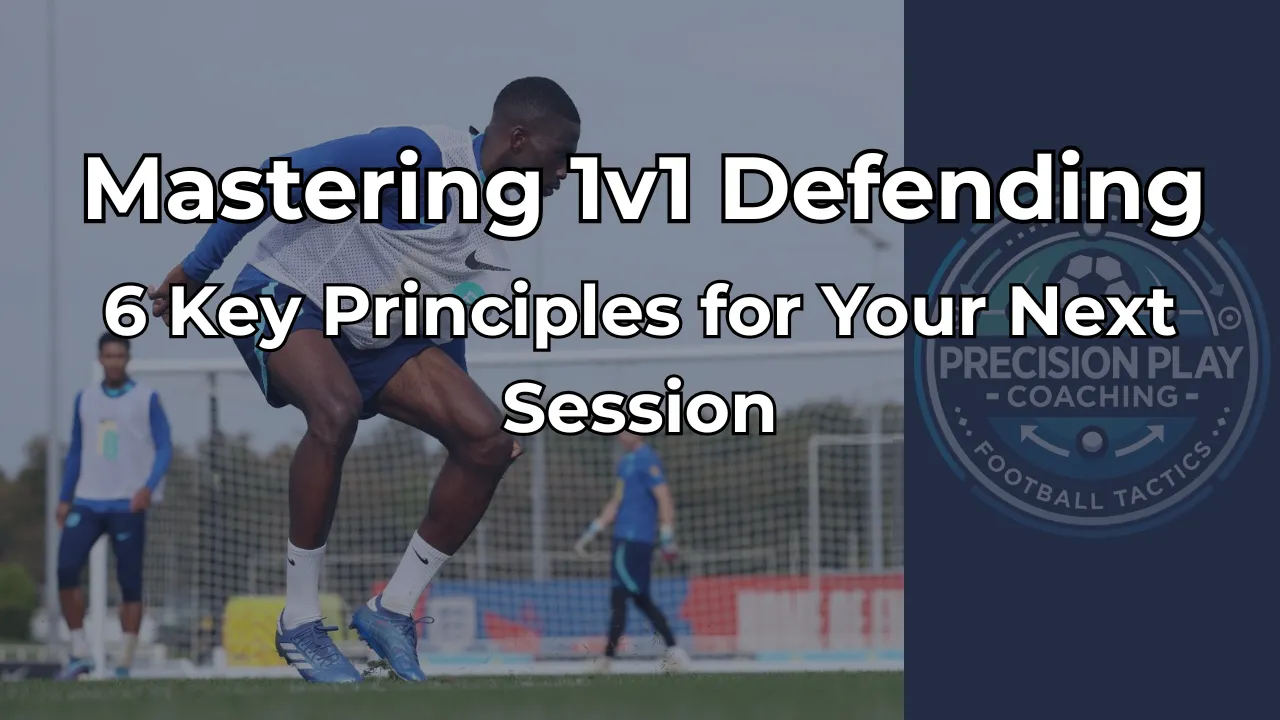
Football coaches, 1v1 defending situations happen everywhere on the pitch—from deep in your own half to the edge of the box. Getting these moments right can prevent dangerous chances and build confidence in your back line.
In this post, we break down the six core principles you need to cover in your defending sessions so your players approach attackers intelligently, stay disciplined, and win the ball cleanly.
1. Speed of Approach: Get There Fast, But Not Too Close
The first step is closing the distance quickly to slow the attacker down. A slow approach gives the attacker time to turn, pick a pass, or drive forward.
However, sprinting right up to the attacker risks being beaten easily with a quick touch in behind. Aim to arrive at a controlled speed, reducing momentum just before contact range so you can adjust and stay balanced.
2. Angle of Approach: Force the Play Where You Want It
Smart defenders don't just close down—they channel. The angle you take dictates where the attacker can go.
- Near your own penalty area? Curve your run to force the attacker wide, away from the dangerous central zone and toward the touchline where options are limited.
- Higher up the pitch or in midfield? Consider forcing play centrally into traffic where teammates can press and create turnovers.
Use your body and positioning to "show" the attacker one way and shut down the other.
3. Body Positioning & Stance: Stay Low, Balanced, and Ready
Great 1v1 defenders look athletic and ready to explode in any direction. Key cues:
- Side-on stance: Slightly angled (not fully square to the attacker, not completely side-on) so you can see both the ball and potential support runs.
- Bent knees and low centre of gravity for quick changes of direction.
- Avoid being too square (easy to wrong-foot) or too sideways (limits explosiveness forward or backward).
This "in-between" posture keeps defenders mobile and reactive.
4. Jockeying Distance: Keep an Arm's Length
Once you're in range, jockey—small, sharp steps to mirror the attacker's movement without committing.
Maintain roughly an arm's length distance: close enough to pressure and threaten a tackle, but with enough space to recover if the attacker accelerates or feints. Too close and you're vulnerable to a burst; too far and they have room to shoot, pass, or dribble past.
5. Patience & Discipline: Don't Dive In
The biggest mistake most young defenders make? Lunging in too early and getting beaten.
Teach patience—jockey for 5–10 seconds if needed. Wait for the perfect moment: when the attacker pushes the ball too far forward, takes a heavy touch, looks down, or slows down. That's when you pounce and win possession cleanly.
Remind players: "Don't force it—let the attacker make the mistake."
6. Eyes on the Ball: Focus and Awareness
Throughout the duel, keep eyes locked on the ball. React to its movement, not the attacker's body feints or step-overs.
Occasional quick shoulder checks for teammates' positions and support are useful, but the primary focus must remain on the ball to avoid being wrong-footed.
"Good defenders defend the space behind them first, then win the ball second. Patience turns pressure into possession."
Coaching 1v1 Defending in Sessions
Bring these principles to life with:
- 1v1 duels in channels or zones with specific goals (e.g., force wide, win ball in 8 seconds)
- Live opposed practices starting with passive defending to build technique
- Small-sided games rewarding successful jockeying and delayed tackles
- Video clips of elite defenders (e.g., Virgil van Dijk, Rúben Dias) showing perfect approach and patience
Drill these six principles consistently and your defenders will become calm, smart, and extremely hard to beat in 1v1 situations.
PrecisionPlayCoaching